
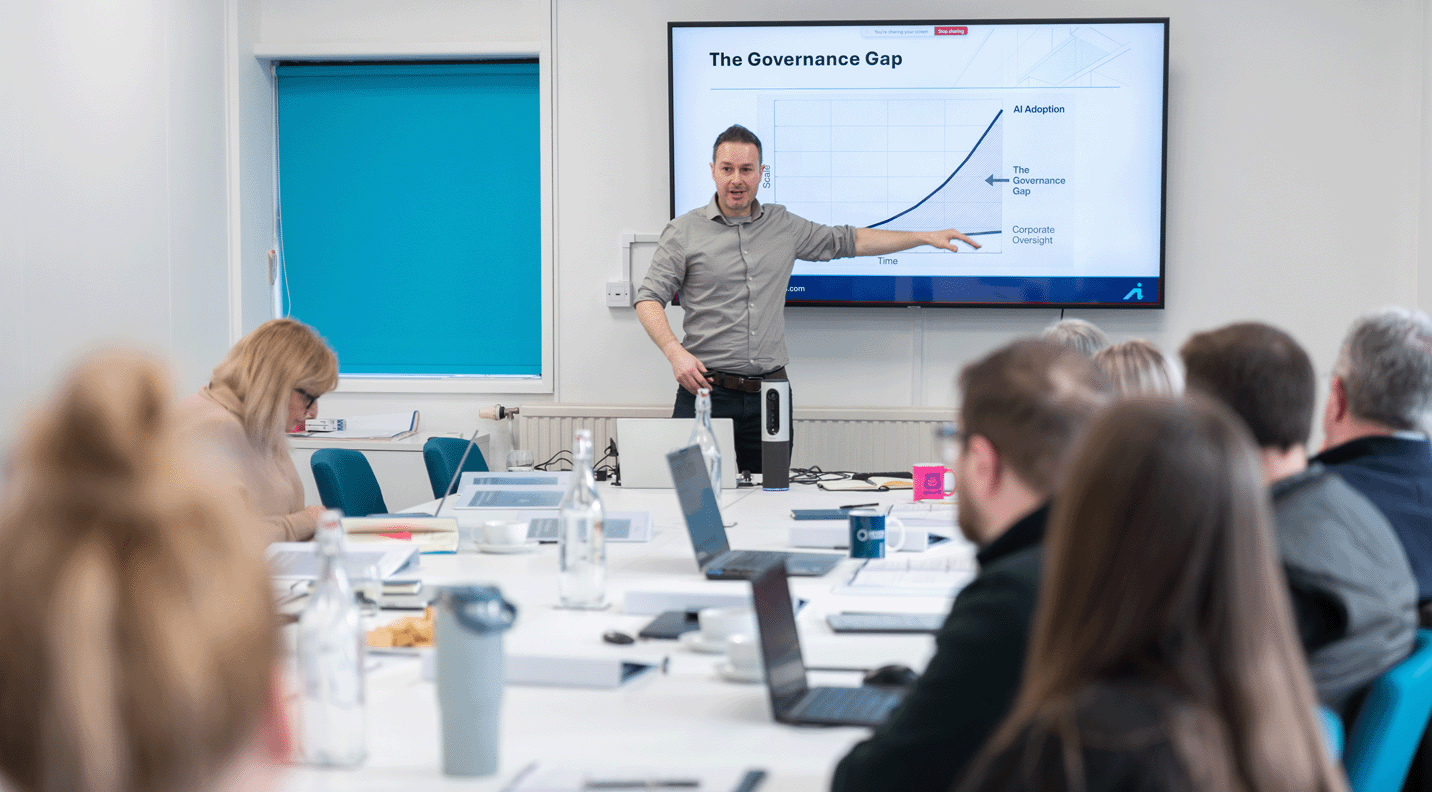
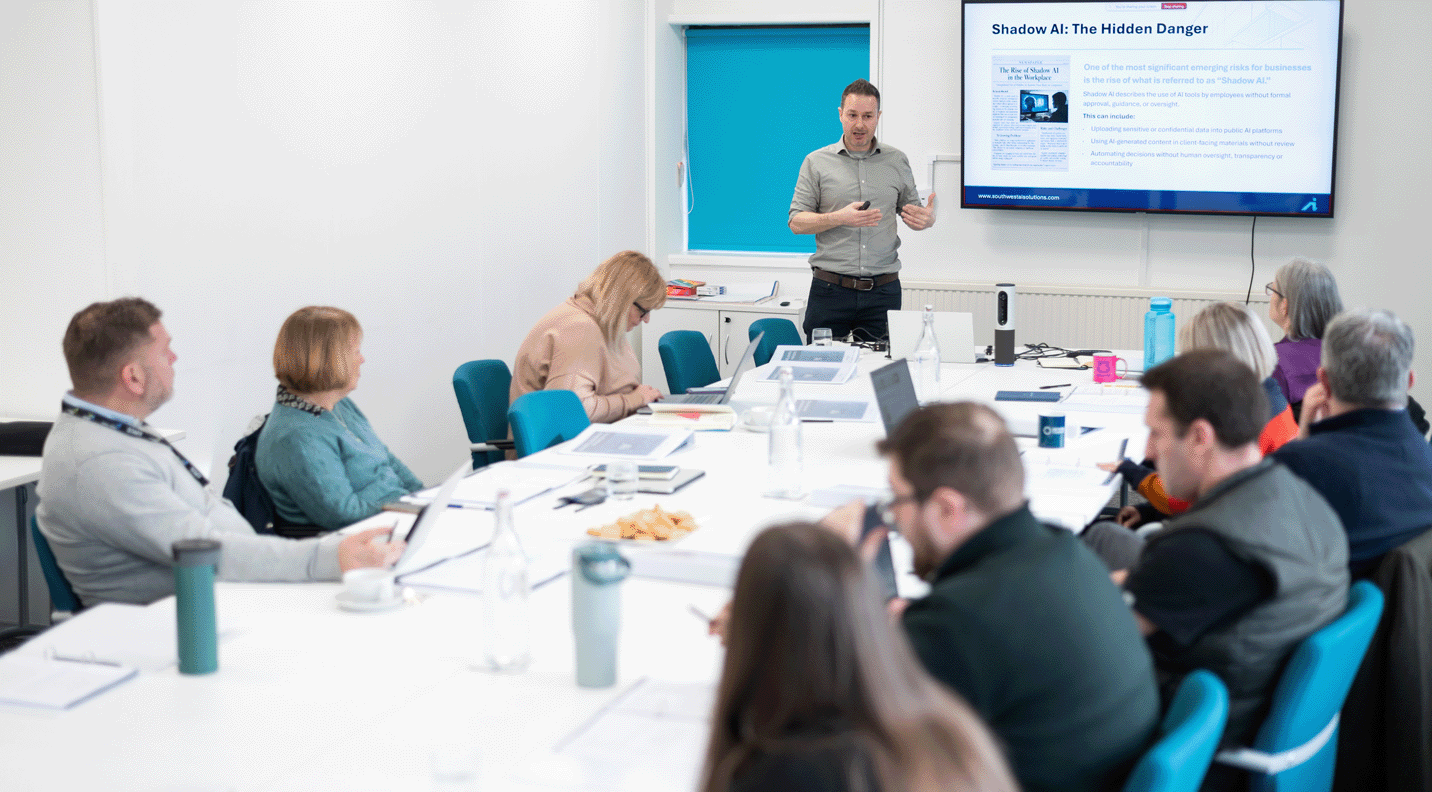
I recently had the pleasure of spending time with the team from Devon Chamber of Commerce, delivering a half day in-house AI training session.
Across the session we explored:
- Why AI governance must be the foundation of any adoption strategy
- How to introduce AI in a safe, structured and controlled way
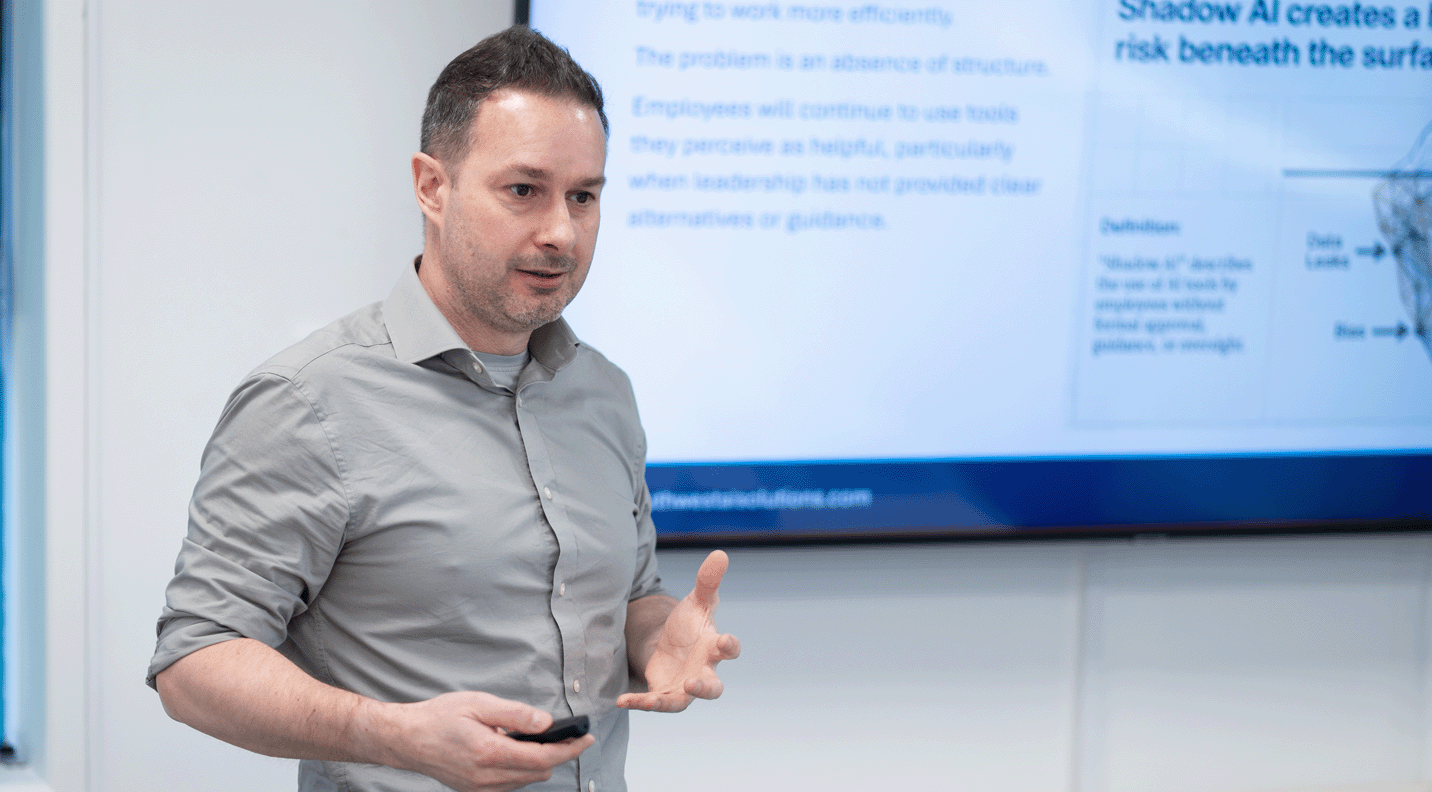
- The risks of unmanaged “Shadow AI” and how organisations can mitigate them
We also covered why Microsoft Copilot provides a secure environment for workplace AI for those organisations already using Microsoft 365 including:
- Practical ways Copilot can support everyday work, from email and documents to meetings, planning, reporting and data analysis
- How to build focused AI assistants in Copilot, trained on your organisation’s data to support specific tasks and workflows
It was a fantastic group – thoughtful questions, great engagement, and a real appetite to use AI in a safe and secure way that supports people’s day to day work.
Each topic generated thoughtful discussion, plenty of questions, and a real appetite to get AI “right” and achieve real value, rather than simply using tech for tech’s sake.
Below is a deeper dive into what we explored.
Why Every Organisation Needs to Take AI Governance Seriously
One of the clearest messages throughout the sessions was this: AI is probably already being used inside most organisations – with or without corporate oversight.
People are already experimenting with public AI tools to help with admin tasks, research, drafting, reporting or problem‑solving.
The question is no longer whether AI is being used in your organisation. The real question is whether it is being used responsibly, consistently, and under leadership control.
This is where AI Governance becomes essential.
Much like building a house, you don’t start with choosing the TV the sofa, or the fitted kitchen (as fun as this might be). You start with getting the foundations in place. AI governance is no different.
Getting the foundations of AI Governance in place first, helps to ensure AI is used responsibly, consistently and under leadership control – rather than by accident or through fragmented efforts happening silently across different teams.
Shadow AI is one of the biggest emerging risks for organisations worldwide. Governance helps to reduce that risk and provide structure. It helps organisations:
- Define which tools are approved
- Protect sensitive and confidential data
- Ensure human oversight remains at the heart of decision‑making
- Build a culture of trust, clarity and confidence
AI governance is not about slowing teams down — in fact, strong governance helps organisations move faster by reducing uncertainty and making AI use predictable and safe.
Introducing ISO/IEC 42001 — The New Global AI Governance Standard
We also explored ISO/IEC 42001, the world’s first global management system standard for AI. This framework helps organisations:
- Build structured governance processes
- Manage risk throughout the AI lifecycle
- Align with ethical, legal and regulatory expectations
- Create documentation that supports audits and accountability
The standard includes clear clauses covering leadership, planning, risk, operation, training, performance evaluation and continuous improvement – all of which help embed responsible AI use at every level of an organisation.
For businesses that want to be ahead of the regulatory curve, ISO/IEC 42001 provides a future‑proofed approach and is something we use when working with our clients to help implement robust governance frameworks.
Understanding Microsoft Copilot
A major section of the training focused on Microsoft Copilot – and why (if an organisation is already using Microsoft 365) Copilot should be the organisation’s first AI tool of choice.
Copilot is uniquely positioned for safe adoption because:
- It keeps all your data inside your organisation’s Microsoft 365 environment
- No information leaves your organisation when using your business login
- It amplifies your productivity in office applications most of us are already using on a daily basis, such as Outlook, Excel and PowerPoint.
This combination of security, privacy, and familiarity makes Copilot ideal for improving productivity without introducing increased risk for the organisation.
The training explored dozens of practical examples of how businesses can use Copilot to:
- Draft messages and emails
- Summarise documents
- Create PowerPoint slides
- Analyse data in Excel
- Turn meeting transcripts into structured minutes
- Produce reports, templates, checklists and actions
Users often report immediate productivity gains, with Microsoft’s 2025 Work Trend Index Annual Report citing that:
- 70% of Copilot users say it makes them more productive
- 68% say it improves work quality
- The biggest savings come from writing, summarising and finding information
In short: Copilot reduces “busy work” and gives people more time for the work that really matters.
Building Your Own AI Assistants (Copilot Agents)
One of the most exciting capabilities we covered (and the one that I find often generates the most enthusiasm and ‘wow factor’) was how organisations can build their own Copilot Agents. These are essentially AI-powered assistants that you trained to do a specific task and can be trained on your organisation’s data only. This makes them incredibly powerful and highly relevant to your organisation.
These AI Assistants are:
- Trained on your organisation’s knowledge
- Designed to perform specific repeatable tasks
- Restricted so they only reference approved data
- Customised with behaviour, tone, compliance rules and workflows
During the workshop we created a number of Copilot Agents including:
- HR Assistant
- Marketing Assistant
- Sales Enquiry Research Assistant
- Meeting Minutes Assistant
- Customer Support Chatbot
Once created, Copilot Agents can be shared with (and used by) staff across your entire organisation – ensuring consistency, quality, and governance.
Copilot Agents aren’t about replacing ‘people’. They’re about giving your teams an added boost with tools that can help them to work faster, more consistently and with greater accuracy.
Why AI Adoption Is a Business Transformation – Not an IT Project
A recurring theme in the training was that AI isn’t just a technology change – it’s a people and culture change.
As business leaders, we have a responsibility to guide this shift and steer our people through this once-in-a-lifetime transformation in the way we work, establish clarity, and ensure AI becomes part of everyday processes.
Starting Your AI Journey: A Step-by-Step Framework
We concluded the training with a simple, practical roadmap grounded in seven steps:
- Map what AI you’re already using across your organisation
- Define your principles for responsible use
- Assign roles and responsibilities
- Draft an AI Policy
- Raise awareness with staff
- Train your people on authorised tools
- Monitor and improve
This framework helps organisations introduce AI safely and confidently, without overwhelming teams or exposing sensitive data.
Interested in Bringing This Training to Your Organisation?
The questions raised during our Devon Chamber session are the same ones being asked by leadership teams across the UK.
- How do we control AI use?
- How do we protect our data?
- How do we unlock productivity without introducing risk?
If you would like to run a similar in-house AI training session for your organisation, get in touch by emailing info@southwestaisolutions.com
Whether you are just starting out or looking to scale responsibly, we can help you build the foundations, train your people, and introduce AI in a way that delivers real value.
Matt Greaves
CEO, South West AI Solutions
Matt Greaves is a strategic advisor in the field of AI adoption and governance. With a 25-year career spanning senior leadership, project delivery, and cross-functional communication, he brings a uniquely structured and pragmatic approach to artificial intelligence adoption.
Through South West AI Solutions, Matt and his team support organisations in developing AI governance frameworks, AI strategies, onboarding AI across teams, and embedding scalable solutions that deliver lasting impact. As an AI partner, Matt is committed to guiding organisations through their AI journey – from first steps to full integration.